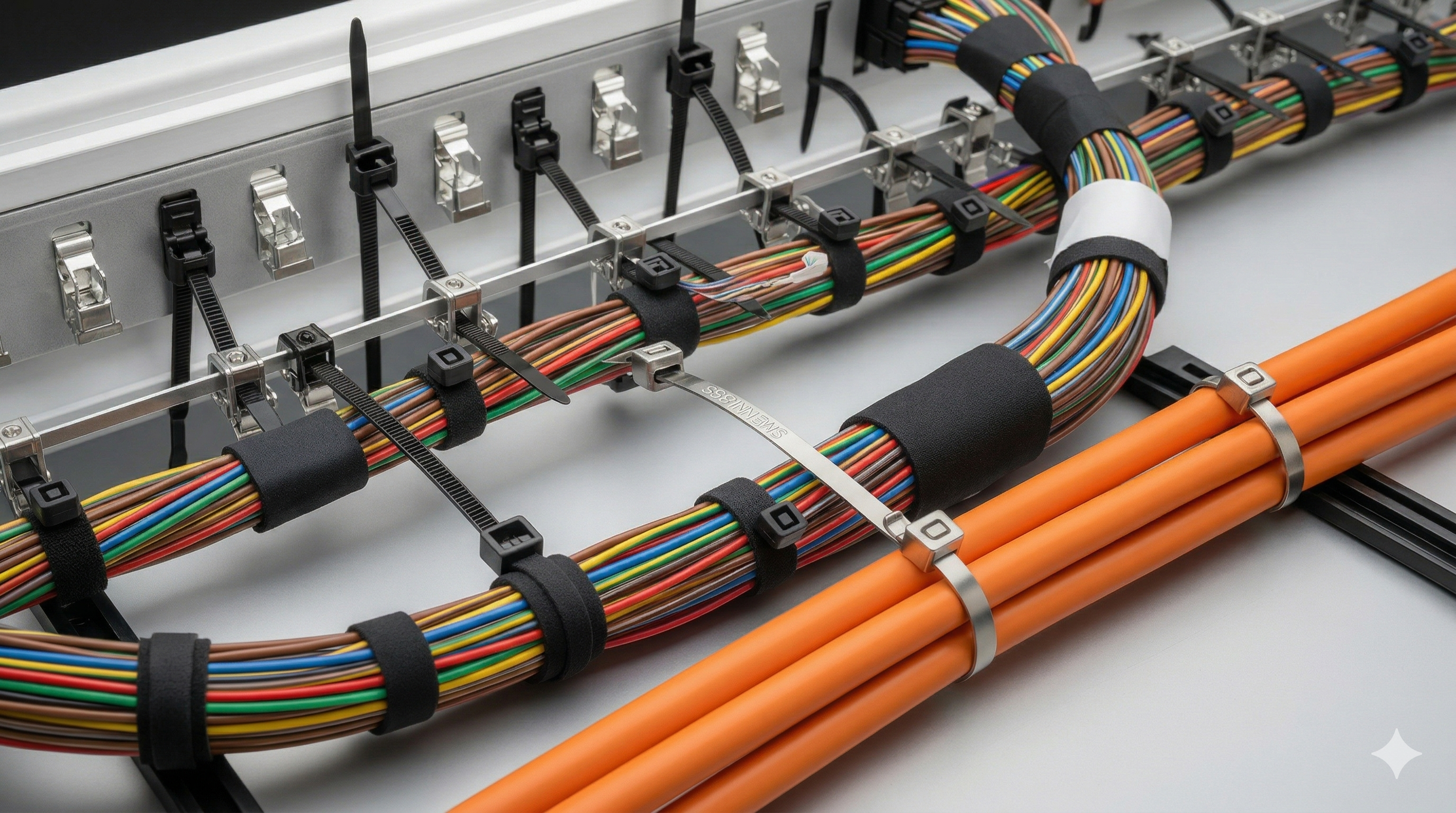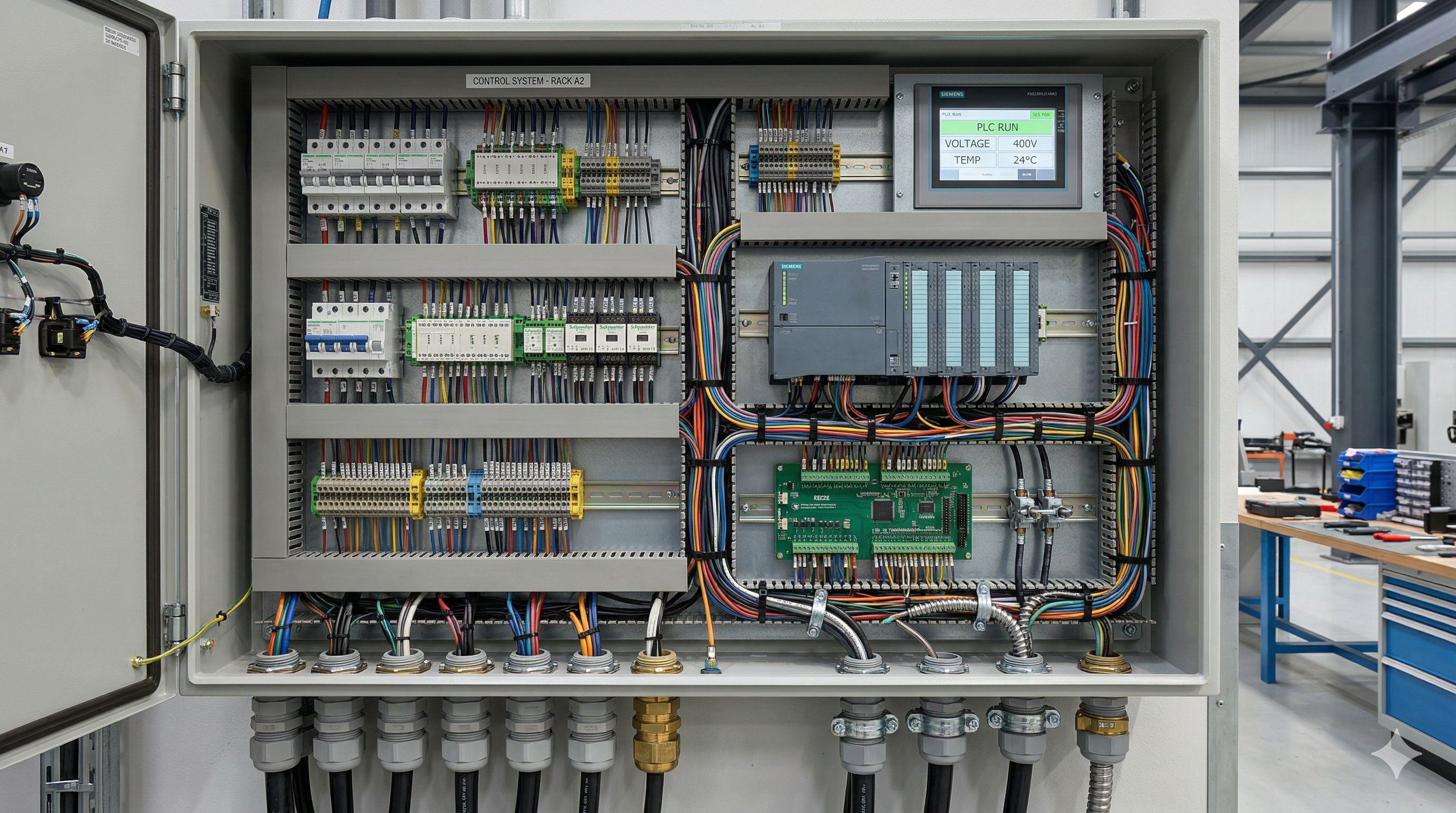
A well-managed electrical panel is faster to commission, safer to operate, and far easier to maintain than one where cables are haphazardly bundled. These best practices apply to motor control centres (MCCs), PLC panels, distribution boards, and any enclosure where multiple cables enter, route, and terminate.
Bundling and Routing Rules
- Keep power cables and signal/control cables in separate bundles — crossing at 90° where unavoidable to minimise EMC interference
- Bundle cables at 150–200 mm intervals for neat appearance and structural support
- Leave 10–15% spare capacity in every bundle for future cable additions
- Never over-tighten cable ties on data cables — excessive clamp force distorts the cable geometry and degrades signal quality
- Use releasable cable ties where cables will need future rerouting or maintenance access
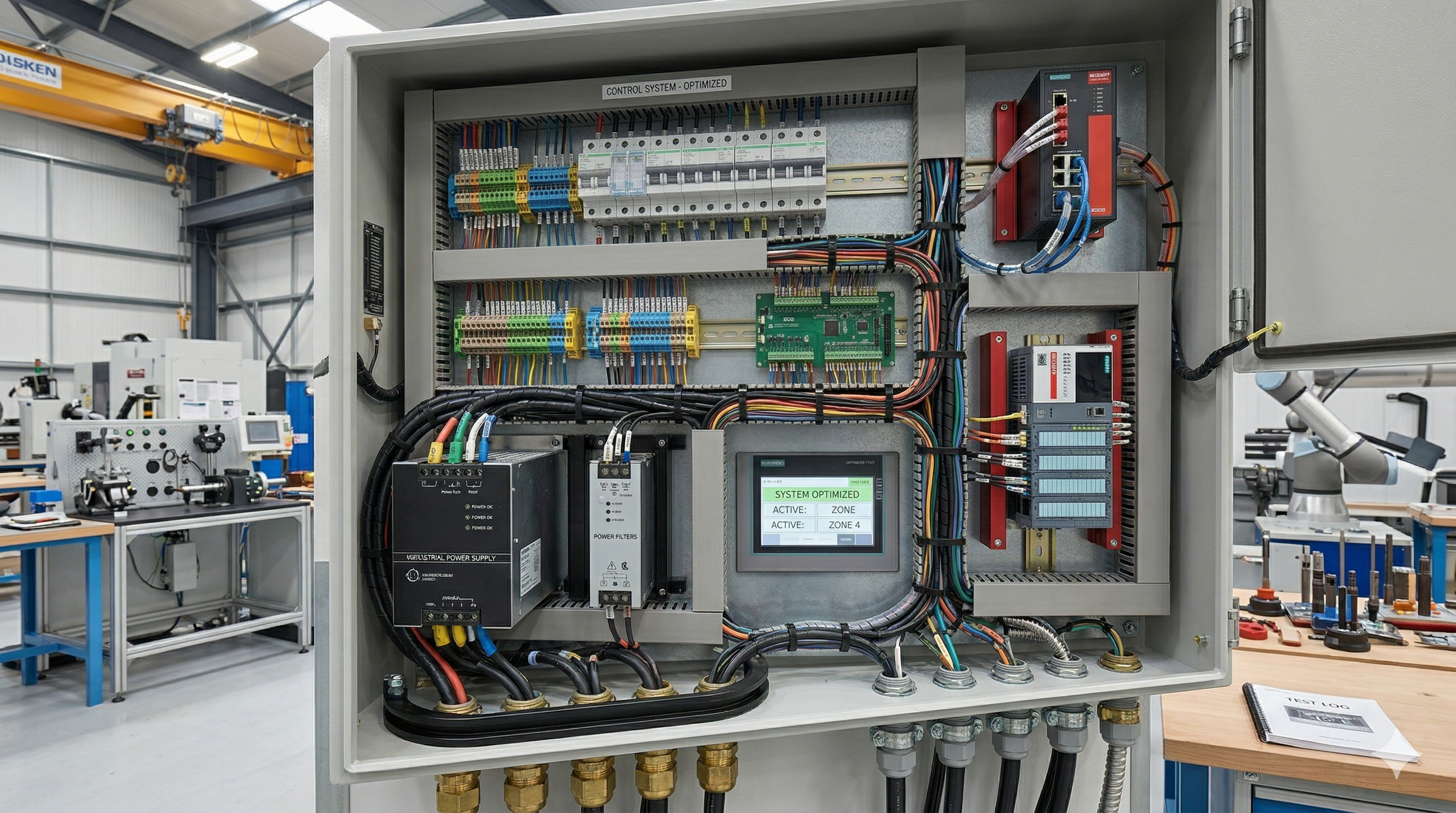 Proper cable management inside MCC panels reduces fault-finding time and improves long-term reliability.
Cable Entry and Sealing
Every cable entering the panel enclosure must be sealed against dust, moisture, and vermin. Use metric polyamide cable glands matched to the cable OD, not the nominal size. For panels rated IP 54 and above, use glands with a locking nut and compression seal. For outdoor kiosks and roadside panels, IP 65 minimum is the correct specification.
Product Recommendations
Inside the panel: natural or black 2.5 mm or 3.6 mm Nylon 6.6 cable ties for signal bundles; 4.8 mm ties for power cable bundles; releasable ties where service access matters.
Panel entry: M20 or M25 metric polyamide cable glands in grey (RAL 7035) to match standard panel aesthetics.
Cable identification: Novoflex identification cable ties with writable label flags — eliminates adhesive label falloff in warm environments.