Auto-translation is for convenience only and may not reflect the exact original meaning.
Old Blogs
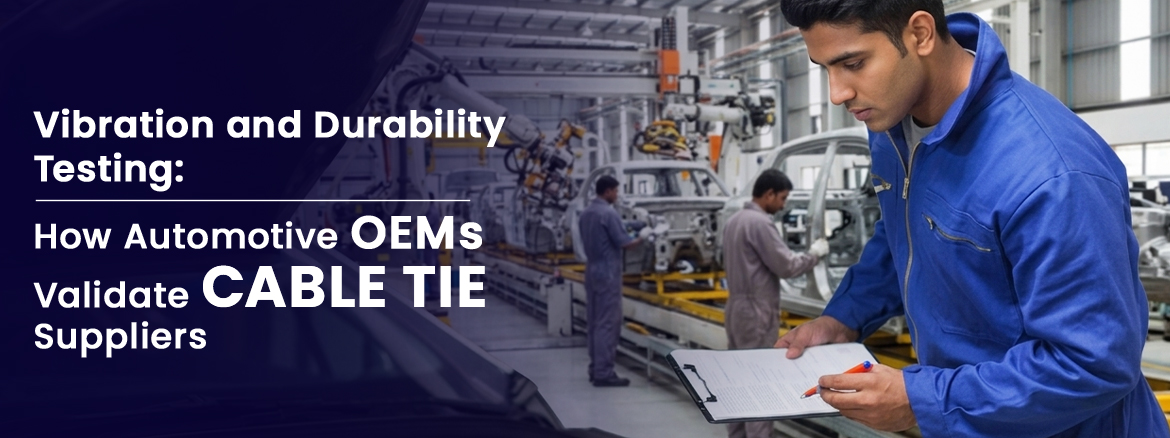
Vibration and Durability Testing: How Automotive OEMs Validate Cable Tie Suppliers
Automotive OEMs validate cable tie suppliers through controlled vibration testing, thermal cycling, fatigue evaluation and long-duration performance analysis. The focus is not on initial strength but on behavior under sustained mechanical stress, environmental exposure and production-scale variation.
Oct 11, 2026 5 min read Novoflex Editorial
Listen to this blog Or 5 min Read
Quick AnswerAutomotive OEMs validate cable tie suppliers through controlled vibration testing, thermal cycling, fatigue evaluation and long-duration performance analysis. The focus is not on initial strength but on behavior under sustained mechanical stress, environmental exposure and production-scale variation.OEM Evaluation PerspectiveOEM supplier validation is not based on a single parameter. It combines testing validation, manufacturing discipline and compliance systems working together to ensure consistent performance under real operating conditions.Inside an Automotive Validation EnvironmentIn automotive validation programs, cable ties are not tested as standalone products. They are evaluated as part of wiring harness systems under simulated operating conditions.Testing environments are designed to replicate:Continuous vibration across vehicle operating frequenciesTemperature variation across the engine, chassis and cabin zonesLoad conditions based on real installation configurationsLong-duration stress representing the vehicle lifecycleThe objective is not to check whether a cable tie holds once but whether it behaves predictably over time under dynamic conditions.Vibration Testing Is Not Just “Shaking the Component.”Automotive vibration validation follows structured testing methodologies aligned with NVH (Noise, Vibration and Harshness) control requirements.How Testing Is ConductedCable ties are tested under:Multi-axis vibration profilesFixture-based setups reflecting actual harness routingApplied loads simulating real installation tensionIn more advanced validation environments, resonance search and dwell testing are performed.This identifies frequencies at which the component experiences amplified stress, conditions where failure risk increases significantly even if tensile strength remains unchanged.What OEM Engineers Actually Observe?During vibration testing, OEM engineers are not just looking for breakage.They evaluate:Stability of retention under continuous excitationMovement of the harness bundles over timeLocking mechanism response to repeated vibration cyclesEarly-stage degradation patternsA cable tie that survives vibration is not automatically acceptable.What matters is how consistently it maintains performance throughout the test cycle.Durability Testing Under Real-World ConditionsVibration is only one part of validation. OEMs combine multiple test conditions to simulate real operating environments.Thermal CyclingRepeated expansion and contraction affect material behavior, influencing long-term locking performance.Fatigue TestingContinuous stress cycles are applied to observe performance degradation over time rather than initial strength.Environmental Stress ExposureHumidity, temperature and mechanical load are combined to evaluate real-world durability.Tensile Behavior Under LoadFocus is placed on controlled load response, not peak strength alone.These combined tests define long-term performance behavior rather than isolated capability.While durability testing defines how components behave under stress, OEMs also evaluate whether suppliers operate within structured automotive quality systems, particularly in IATF 16949 alignment, which influences supplier selection in automotive programs where process control directly influences validation outcomes.Understanding Failure: It’s Not “Loosening,” It’s Material BehaviorIn automotive environments, cable tie performance degradation is typically linked to polymer behavior under stress.Common failure mechanisms include:Stress relaxation – reduction in retention force over timePolymer creep – gradual deformation under sustained loadThermal aging effects – reduced flexibility after repeated temperature exposureLocking degradation under vibration cyclesThese are not visible defects.They develop gradually and become apparent only under extended operating conditions.Why Material Behavior Matters in Validation?Automotive cable ties are typically manufactured using PA66 (polyamide 6.6).However, performance depends on more than material selection alone.OEM validation considers:Stability of material behavior under temperature variationResponse to long-term mechanical stressConsistency across production batchesProducts manufactured using UL-tested nylon 6.6 support predictable performance under these conditions when combined with controlled manufacturing processes.The Gap Between Lab Testing and Real-World PerformanceOne of the key challenges in validation is the difference between controlled testing and real operating conditions.A cable tie may:Pass vibration testing in isolationPerform differently when installed across varied harness geometriesRespond differently based on installation force or tool variationThis is why OEM validation includes fixture-based testing and real assembly simulations, not just standard lab testing.Why Manufacturing Consistency Still Matters in Testing?Even the most rigorous validation process cannot compensate for inconsistent production.OEMs evaluate whether a cable ties manufacturer can reproduce the same performance acrossMultiple production batchesDifferent tooling cyclesLong production timelinesValidation success must be repeatable, not limited to initial samples.OEM validation often extends to assessing whether suppliers maintain controlled process capability levels, ensuring performance variation remains within defined statistical limits across production cycles.OEM validation may also include process capability (Cpk) evaluation to ensure performance repeatability across production cycles.This is where process-controlled cable tie suppliers differentiate from non-structured manufacturers.Beyond validation results, OEMs assess how manufacturing processes are governed within structured compliance systems, particularly in ISO-aligned supply environments where process discipline directly influences long-term performance consistency.System-Level Validation: Cable Ties and Mounting InterfacesCable ties do not function independently. They operate within a load path that includes mounting points and surrounding structures.OEM validation increasingly considers the following:Interaction between the tie and the mounting surfaceLoad distribution across fastening systemsBehavior under combined stress conditionsWorking with a cable tie mounts supplier or cable tie mount manufacturer within a unified system reduces variation and improves validation reliability.How Novoflex Supports Automotive Validation Requirements?With over four decades of manufacturing experience since 1980, Novoflex operates as a manufacturer of engineered plastic components aligned with automotive OEM validation requirements.The manufacturing approach focuses on:Process-controlled production systemsDocumented batch traceabilityConsistent tooling and molding disciplineStructured quality assurance processesThis allows validation outcomes to remain consistent across production batches and long-term supply cycles.Products are manufactured using nylon 6.6 and tested by UL, supporting stable performance under automotive operating conditions.Novoflex is trusted by leading OEMs, including Maruti Suzuki, Kia, Tata Motors, JCB, Escorts and more, reflecting alignment with structured automotive supply requirements.Explore applications across automotive environments.What This Means for OEM Decision-Makers?Validation is not a one-time approval step.It is an assessment of whether a supplier can maintain performance under:continuous vibrationenvironmental stresslong-term production cyclesSuppliers that demonstrate controlled manufacturing behavior reduce variability and improve long-term system stability.At scale, even minor variation can translate into harness instability, revalidation cycles or field-level quality concerns.For OEM procurement teams, these validation outcomes directly influence supplier qualification decisions and long-term production risk.ConclusionVibration and durability testing define how cable ties perform under real automotive conditions.OEM validation focuses on behavior over time, not just initial strength.Performance under vibration, thermal variation and sustained load determines long-term reliability.This is why OEMs prioritise a cable ties manufacturer or zip tie manufacturer capable of delivering consistent, repeatable performance under real operating conditions.
Quick Answer
Automotive OEMs validate cable tie suppliers through controlled vibration testing, thermal cycling, fatigue evaluation and long-duration performance analysis. The focus is not on initial strength but on behavior under sustained mechanical stress, environmental exposure and production-scale variation.
OEM Evaluation Perspective
OEM supplier validation is not based on a single parameter. It combines testing validation, manufacturing discipline and compliance systems working together to ensure consistent performance under real operating conditions.
Inside an Automotive Validation Environment
In automotive validation programs, cable ties are not tested as standalone products. They are evaluated as part of wiring harness systems under simulated operating conditions.
Testing environments are designed to replicate:
Continuous vibration across vehicle operating frequencies
Temperature variation across the engine, chassis and cabin zones
Load conditions based on real installation configurations
Long-duration stress representing the vehicle lifecycle
The objective is not to check whether a cable tie holds once but whether it behaves predictably over time under dynamic conditions.
Vibration Testing Is Not Just “Shaking the Component.”
Automotive vibration validation follows structured testing methodologies aligned with NVH (Noise, Vibration and Harshness) control requirements.
Fixture-based setups reflecting actual harness routing
Applied loads simulating real installation tension
In more advanced validation environments, resonance search and dwell testing are performed.
This identifies frequencies at which the component experiences amplified stress, conditions where failure risk increases significantly even if tensile strength remains unchanged.
What OEM Engineers Actually Observe?
During vibration testing, OEM engineers are not just looking for breakage.
They evaluate:
Stability of retention under continuous excitation
Movement of the harness bundles over time
Locking mechanism response to repeated vibration cycles
Early-stage degradation patterns
A cable tie that survives vibration is not automatically acceptable.
What matters is how consistently it maintains performance throughout the test cycle.
Durability Testing Under Real-World Conditions
Vibration is only one part of validation. OEMs combine multiple test conditions to simulate real operating environments.
Thermal Cycling
Repeated expansion and contraction affect material behavior, influencing long-term locking performance.
Fatigue Testing
Continuous stress cycles are applied to observe performance degradation over time rather than initial strength.
Environmental Stress Exposure
Humidity, temperature and mechanical load are combined to evaluate real-world durability.
Tensile Behavior Under Load
Focus is placed on controlled load response, not peak strength alone.
These combined tests define long-term performance behavior rather than isolated capability.
Understanding Failure: It’s Not “Loosening,” It’s Material Behavior
In automotive environments, cable tie performance degradation is typically linked to polymer behavior under stress.
Common failure mechanisms include:
Stress relaxation – reduction in retention force over time
Polymer creep – gradual deformation under sustained load
Thermal aging effects – reduced flexibility after repeated temperature exposure
Locking degradation under vibration cycles
These are not visible defects.
They develop gradually and become apparent only under extended operating conditions.
Why Material Behavior Matters in Validation?
Automotive cable ties are typically manufactured using PA66 (polyamide 6.6).
However, performance depends on more than material selection alone.
OEM validation considers:
Stability of material behavior under temperature variation
Response to long-term mechanical stress
Consistency across production batches
Products manufactured using UL-tested nylon 6.6 support predictable performance under these conditions when combined with controlled manufacturing processes.
The Gap Between Lab Testing and Real-World Performance
One of the key challenges in validation is the difference between controlled testing and real operating conditions.
A cable tie may:
Pass vibration testing in isolation
Perform differently when installed across varied harness geometries
Respond differently based on installation force or tool variation
This is why OEM validation includes fixture-based testing and real assembly simulations, not just standard lab testing.
Why Manufacturing Consistency Still Matters in Testing?
Even the most rigorous validation process cannot compensate for inconsistent production.
Validation success must be repeatable, not limited to initial samples.
OEM validation often extends to assessing whether suppliers maintain controlled process capability levels, ensuring performance variation remains within defined statistical limits across production cycles.
OEM validation may also include process capability (Cpk) evaluation to ensure performance repeatability across production cycles.
This is where process-controlledcable tie suppliers differentiate from non-structured manufacturers.
Beyond validation results, OEMs assess how manufacturing processes are governed within structured compliance systems, particularly inISO-aligned supply environments where process discipline directly influences long-term performance consistency.
System-Level Validation: Cable Ties and Mounting Interfaces
Cable ties do not function independently. They operate within a load path that includes mounting points and surrounding structures.
OEM validation increasingly considers the following:
Interaction between the tie and the mounting surface
Load distribution across fastening systems
Behavior under combined stress conditions
Working with acable tie mounts supplier or cable tie mount manufacturer within a unified system reduces variation and improves validation reliability.
How Novoflex Supports Automotive Validation Requirements?
With over four decades of manufacturing experience since 1980, Novoflex operates as a manufacturer of engineered plastic components aligned with automotive OEM validation requirements.
The manufacturing approach focuses on:
Process-controlled production systems
Documented batch traceability
Consistent tooling and molding discipline
Structured quality assurance processes
This allows validation outcomes to remain consistent across production batches and long-term supply cycles.
Products are manufactured using nylon 6.6 and tested by UL, supporting stable performance under automotive operating conditions.
Novoflex is trusted by leading OEMs, including Maruti Suzuki, Kia, Tata Motors, JCB, Escorts and more, reflecting alignment with structured automotive supply requirements.
It is an assessment of whether a supplier can maintain performance under:
continuous vibration
environmental stress
long-term production cycles
Suppliers that demonstrate controlled manufacturing behavior reduce variability and improve long-term system stability.
At scale, even minor variation can translate into harness instability, revalidation cycles or field-level quality concerns.
For OEM procurement teams, these validation outcomes directly influence supplier qualification decisions and long-term production risk.
Conclusion
Vibration and durability testing define how cable ties perform under real automotive conditions.
OEM validation focuses on behavior over time, not just initial strength.
Performance under vibration, thermal variation and sustained load determines long-term reliability.
This is why OEMs prioritise acable ties manufacturer or zip tie manufacturer capable of delivering consistent, repeatable performance under real operating conditions.
Share this article:
Written byNovoflex Editorial
The Novoflex editorial team covers product engineering, cable management applications, and industry trends across automotive, EV, aerospace, and industrial sectors.
Key Factors Big OEMs Consider Before Finalising Long-Term Component Suppliers
Big OEMs do not finalise component suppliers as a routine procurement step. These decisions influence production stability, audit outcomes, maintenance behaviour and operational risk across multiple plants and long manufacturing lifecycles.
Oct 11, 20265 min read
Old Blogs
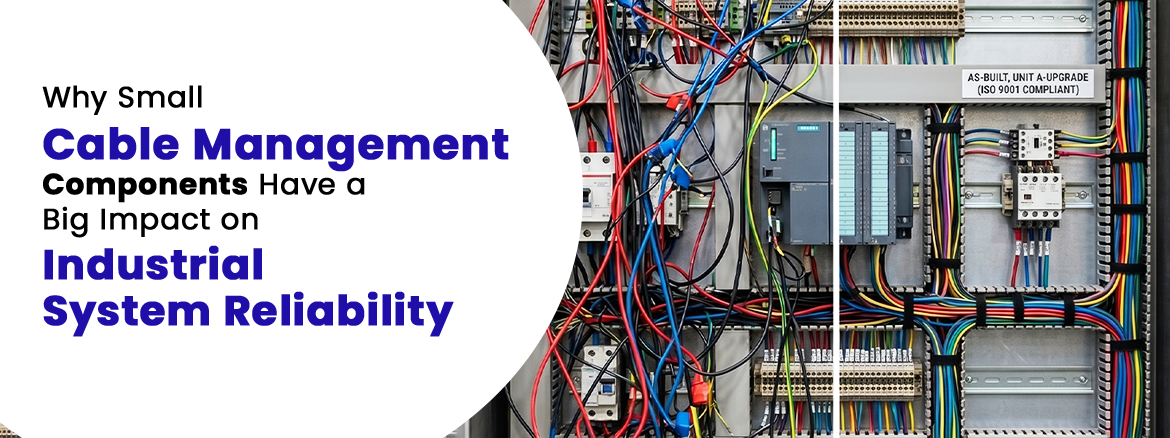
Why Small Cable Management Components Have a Big Impact on Industrial System Reliability?
Small cable management components account for only a small fraction of an industrial project's cost, yet they play a significant role in cable routing, assembly efficiency, maintenance accessibility and long-term system reliability. For OEMs, these components are not simply installation accessories; they are essential elements of a dependable cable management system.
Oct 11, 20265 min read
Old Blogs
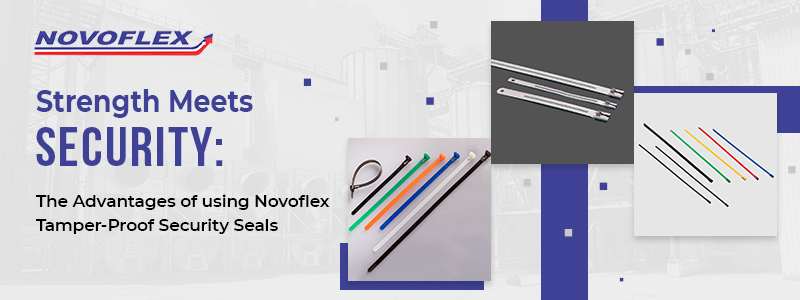
The Advantages of Using Novoflex Tamper-Proof Security Seals
In a fast-moving, interconnected world, safeguarding goods, sensitive materials, and personal effects has never been more critical. From industrial freight shipments to personal travel bags, tamper...
Apr 28, 20255 min read
Can not find what you are looking for?Talk to our experts for tailored solutions and product recommendations.